


Based on the latest 2025 revision of China’s Patent Examination Guidelines, this paper employs empirical analysis of typical cases to delve into the “three-step examination framework” for assessing the subject matter eligibility of AI-related inventions: ethical examination, the exclusion of rules and methods for mental activities, and the determination of a technical solution. Among these, of central importance is the determination of a technical solution as to whether algorithmic features are substantively integrated with technical features, thereby jointly constituting technical means that apply the laws of nature to solve a technical problem and achieve a technical effect conforming to the laws of nature. Furthermore, through a comparative analysis with the USTPTO’s Mayo-Alice two-step test, this paper reveals the substantive convergence between the two jurisdictions in the criteria for subject matter eligibility. This article aims to deepen the theoretical understanding of the criteria for assessing the subject matter eligibility of AI-related inventions and to provide practical references for patent drafting and prosecution strategies for innovation entities in the AI field.
1. Introduction
Artificial Intelligence (AI), as a key driver of new quality productive forces, refers to a class of technologies that enable machines to simulate aspects of human intelligence – such as perception and decision-making – through sophisticated algorithms (e.g., deep learning, reinforcement learning, neural networks, fuzzy logic, and genetic algorithms)1,2. With the widespread application of AI technologies in fields such as autonomous driving, smart healthcare, industrial control, and big data analytics, related technological innovations continue to emerge, accompanied by a surge in the demand for patent protection3.
AI-related inventions often exhibit the dual nature of both rules for mental activities and technologies, with their inventive concept often residing in improvements to algorithms. Accordingly, the subject matter eligibility for AI-related inventions has become a focal issue in the global intellectual property community. In recent years, the China National Intellectual Property Administration (CNIPA) has progressively refined the relevant examination standards and has developed a systematic framework for examining AI-related patent applications through multiple revisions of the Patent Examination Guidelines (hereinafter referred to as the “Guidelines”) 4,5,6. However, statistics indicate that disputes relating to the determination of a technical solution account for more than 85% of cases7 in patent invalidation proceedings involving AI patents, and such disputes account for nearly 75%8 of cases in reexamination proceedings relating to patent applications in the new-generation information technology industry, including the AI sector. Moreover, foreign innovation entities have expressed concerns regarding the vagueness about the examination criteria applied by CNIPA for determining the subject matter eligibility of computer program-related inventions, particularly with respect to whether a claimed solution incorporates “technical means”9. Therefore, the determination of a technical solution constitutes both a central focus and a principal challenge in assessing the subject matter eligibility of AI-related inventions.
Against this backdrop, this paper aims to assess the CNIPA’s current examination standards for the subject matter eligibility of AI-related inventions and to demonstrate, by drawing a comparison with the USPTO’s standards, the convergence between the underlying examination logic of the two jurisdictions, thereby providing practical references for innovation entities and IP practitioners in the AI field.
2. Examination Standards for Subject Matter Eligibility of AI-related Inventions
The current Guidelines establish a three-step examination framework for assessing the subject matter eligibility of a claim drawn to an AI-related invention by considering the claim as a whole. The first step involves the ethical examination under Article 5(1) of the Patent Law; the second step involves the exclusion of rules and methods for mental activities under Item (2) of Article 25(1), of the Patent Law; and the third step involves the determination as to whether a claimed solution constitutes a technical solution under Article 2(2) of the Patent Law, as illustrated in Figure 1. This section will discuss the specific standards applied in these three steps. Additionally, for comparison purposes, it also outlines the current framework for assessing subject matter eligibility applied by the USPTO.
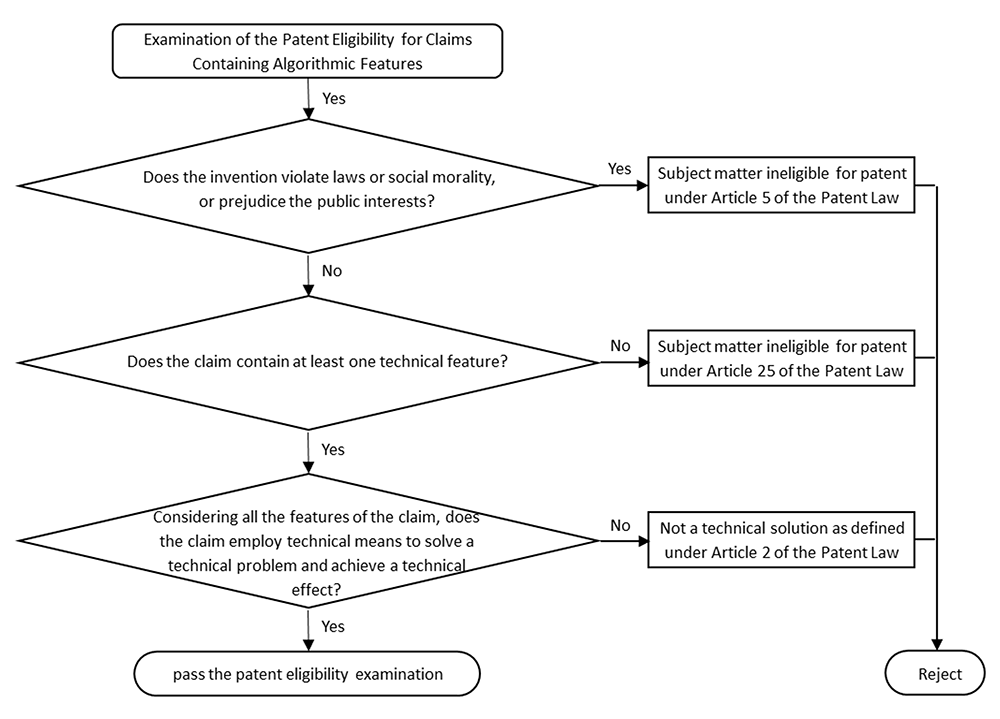
Figure 1: Subject Matter Eligibility Examination Process
2.1 CNIPA’s Examination Standards for Subject Matter Eligibility of AI-related Inventions
2.1.1 Step One: Preliminary Ethical Examination
The first step in assessing the subject matter eligibility of AI-related inventions is to determine whether a patent application falls within the circumstances set forth in Article 5(1) of the Patent Law, which stipulates that no patent right shall be granted for any invention-creation that violates laws or social morality, or is detrimental to the public interest.
With the growing prevalence of AI technologies in fields such as social governance, commercial decision-making, and public services, algorithmic systems may give rise to concerns relating to personal privacy, data security, and algorithmic discrimination in processes such as data collection, model training, and decision-making processes. To guide the development of AI technologies toward “AI for good”, the newly revised Guidelines in 2025 introduced the ethical examination. Pursuant to Article 5 of the Patent Law, AI-related patent applications must comply with laws, social morality, and the public interest, particularly in terms of data collection, label management, rule setting, and recommendation decision-making.6
For example, a patent application titled “Big Data-Based Assistance System for Mattress Sales in Shopping Malls” involves the collection of personal information for commercial marketing purposes without user consent, thereby violating the relevant provisions of the Personal Information Protection Law and rendering the application ineligible for patent protection. As another example, a patent application titled “Method for Establishing an Emergency Decision-Making Model for Autonomous Vehicles” incorporates discriminatory factors such as gender and age in its algorithmic rule setting, which contravenes social morality and thus renders the application ineligible for patent protection.6
As a preliminary matter in determining the subject matter eligibility of AI-related inventions, the ethnical examination institutionally ensures that the development of AI technologies aligns with the public interest and precludes patent protection for inventions that pose clear risks to society.
2.1.2 Step Two: Exclusion of Rules and Methods for Mental Activities
Once the patent application passes the preliminary ethnical examination, the process continues to assess whether the claimed subject matter is excluded from patentability under Article 25(1), Item (2). This second step involves the exclusion of rules and methods for mental activities.
In the field of AI technology, substantial innovation is embodied in algorithmic improvements. Mathematical algorithms or principles, per se, constitutes logical rules for mental activities rather than technical solutions applying the laws of nature to solve technical problems. Granting patent protection for such subject matter would result in the monopolization of fundamental mathematical concepts, thereby impeding their free use in reasoning and basic scientific inquiry, which contradicts the patent system’s goal of fostering technological innovation. Meanwhile, given that AI-related inventions usually integrate algorithmic features with technical elements, the Guidelines have adopted a relatively flexible standard for examining such applications. Under the Guidelines, the inclusion of some technical feature suffice to clear the exclusion of rules and methods for mental activities.
Regarding claim categories, AI-related inventions may take the form of method claims or product claims. In the method claims, the technical features are steps. In the product claims, the technical features may be components (e.g., modules) that are connected to one another in a certain manner. The Guidelines interpret the technical features as integral parts of some technical means– specifically steps or components applying the laws of nature to solve a technical problem – thus distinguishing them from purely algorithmic features.
It is worth noting that if all limitations of the claim, apart from the subject matter title, entirely recite the algorithm itself, the claim is, in substance, still directed to the abstract algorithm. As such, the claim is considered to relate merely to rules and methods for mental activities and thus falls within the exclusions under Article 25(1), Item (2) of the Patent Law.
2.1.3 Step Three: Determination of Technical Solution
If a claim containing algorithmic features falls under the category of mental activities, it necessarily fails to constitute a “technical solution”. Conversely, if such a claim, when considered as a whole, does not fall under the category of mental activities, then the process proceeds to determine whether the claim, as a whole, constitutes a “technical solution”. This third step represents the core and most challenging aspect of the subject matter eligibility assessment for AI-related inventions.
The Guidelines define a “technical solution” as a combination of technical means applying the laws of nature to solve a technical problem. This definition underpins the “three-element” test– “technical means, technical problem, and technical effect”5. The core inquiry is whether a claimed solution employs technical means. According to the Guidelines, for AI algorithm patent applications, the technical means consist in a close integration between algorithmic features and technical features. When considered as a whole, such integration reflects the application of the laws of nature, thereby solving a technical problem and producing a technical effect in accordance with the laws of nature.
As a matter of legal framework, the determination of a technical solution is not based on assessing individual features in isolation; rather, it requires the evaluation of whether the features of the claim, taken as a whole, are integrated into technical means for solving a technical problem. In other words, the focus of the examination lies not on whether the algorithm itself possesses technical attributes, but on whether it is substantively integrated with technical features within the overall solution, such that the claim, as a whole, constitutes a technical solution that applies the laws of nature to achieve a technical effect. This holistic approach demonstrates that the patent system does not categorically exclude subject matters directed to abstract ideas, but rather seeks to avoid awarding exclusive rights to pure intellectual achievements divorced from specific technical applications. When algorithmic features are confined to data calculation or rule description, they are generally regarded as abstract mental activities. However, when an algorithm is closely integrated with real-world applications and produces a verifiable technical effect at the technical level, it may constitute a technical solution.
Furthermore, the determination of a “technical solution” focuses on the nature of the claim itself and does not entail a comparison with the prior art. In particular, it does not consider whether the technical means recited in the claim, or any combination thereof, are well understood, routine, and conventional (WURC) in the art.
In the examination practice for AI-related inventions, the Guidelines further elaborate on the integration relationships between algorithmic features and technical features by categorizing them into three typical scenarios. The first, and most common, scenario involves the application of an algorithm to a specific technical field to process data with a clear technical meaning. The second scenario entails a specific technical association between the algorithm and the internal structure of a computer system, thereby improving the performance of the system. The third scenario concerns the use of algorithms in big data analysis within specific application fields to mine intrinsic correlations in the data conforming to the laws of nature1,5. Although these scenarios differ in their manifestations, they share the common underlying logic: algorithmic features and technical features are substantively integrated and together form technical means that apply the laws of nature to solve a technical problem. The following sections discuss each of these scenarios in detail under this logic.
(1) Scenario One: Application of algorithms in specific technical field to process data with clear technical meaning
The 2019 revision of the Guidelines introduced, for the first time, a dedicated section setting forth examination rules for subject matter eligibility of invention applications involving algorithmic features, including those in the AI field4. The Guidelines then adopted a relatively cautious attitude to the patent protection of AI algorithm-related inventions, explicitly enumerating only the examples where algorithmic improvements are applied to specific technical fields. In such examples, the algorithms are typically closely linked to specific technical fields, and the data they process possesses a definite technical meaning within those fields, such as temperature, pressure, speech signals, or image pixels. Consequently, the execution of the algorithm is no longer an abstract mathematical calculation but reflects the application of the laws of nature to solve a technical problem (e.g., equipment failure prediction, signal denoising, or image recognition), thereby producing a corresponding technical effect (e.g., improved prediction accuracy, reduced noise, or enhanced recognition accuracy). Therefore, such solutions can generally be recognized as a combination of technical means applying the laws of nature and thus constitute a technical solution.
(2) Scenario Two: Specific technical association between algorithms and computer system’s internal architecture, thereby improving the performance of the system
With the growing versatility of AI algorithms, the types of data they process have become increasingly diverse. Leveraging algorithmic innovations to fully unlock the inherent potential of hardware may, in itself, constitute a significant technical contribution. Overemphasizing the requirement that algorithms must be applied to a specific technical field could unduly narrow the scope of protection for algorithmic innovations, thereby impeding innovation in core AI algorithms.
In response to these practical needs, the 2023 revision of the Guidelines further relaxed the restrictions on the patentability of general-purpose algorithms by introducing examination criteria for solutions involving improvements in the performance of computer systems by algorithms.5
In such scenarios, the key inquiry is whether a specific technical association exists between the algorithmic features and the internal structure of the computer system. The so-called “specific technical association” does not mean that a computer is merely used as a tool to run an algorithm; rather, it requires a mutual adaptation and coordination between the algorithmic features and the internal structure of the computer system at the level of technical implementation. For example, this may involve adjusting the architecture or relevant parameters of a computer system to support the operation of a specific algorithm or model, making adaptive improvements to an algorithm or model based on the particular internal architecture or parameters of a computer system, or a combination of both.1
This type of specific technical association between the algorithmic features and the internal structure of a computer system constitutes, in essence, technical means that apply the laws of nature. Such technical means can solve technical problems relating to improvements in hardware computational efficiency or execution performance (e.g., reducing data storage requirements, lowering data transmission volume, or increasing processing speed), thus improving the performance of the computer system and producing technical effects conforming to the laws of nature. Therefore, even if the claim does not specify a particular technical field, it may still qualify as a technical solution.8,10
(3) Scenario Three: Use of Algorithms in big data analysis within specific application fields to mine intrinsic correlations in data conforming to the laws of nature
AI technology is also widely applied in various big data analysis scenarios, including the use of classification, clustering, regression analysis, neural networks, and other algorithms for data analysis and prediction. Classification, clustering, regression analysis, and neural networks are, in essence, mathematical concepts and therefore fall within the category of abstract mental activities. However, when AI algorithms are applied to big data analysis in specific application fields and reveal intrinsic correlations among objective entities in conformity to the laws of nature through data mining, such solutions may qualify as technical solutions.
To encourage the application of algorithms in big data analysis in specific application fields and to promote the transformation of data resources into real productive forces, the 2023 revision of the Guidelines has added corresponding examination criteria in this regard. Specifically, where an algorithm reveals, through the analysis of data from specific application fields, intrinsic correlations in conformity to the laws of nature and thereby solves a technical problem relating to improving the reliability or accuracy of big data analysis in that field and produces corresponding technical effects, the data mining steps employed may constitute technical means. Accordingly, such a solution may be recognized as a technical solution and thus eligible.5
In such patent applications, the data processed by the algorithm must be big data from a particular application field, lifting the algorithm from the abstract level of general-purpose algorithms. Moreover, the key inquiry is whether the correlations identified through data mining reflect intrinsic relationships in conformity to the laws of nature, rather than relationships governed by only economic or social laws.
2.2 Overview of U.S. Examination Standards for Patent Eligibility of AI-related Inventions
Based on a series of precedents, the USPTO has established the “Mayo-Alice” two-step test for subject matter eligibility of algorithm-related inventions:
(Step 2A) Evaluation of whether the claim is directed to a law of nature, a natural phenomenon, or an abstract idea (i.e., a judicial exception); and
(Step 2B) Evaluation of whether the claim recites additional elements that amount to significantly more than the judicial exception.11
Step 2A of the subject matter eligibility analysis is further developed into a two–pronged inquiry. The first prong (Step 2A, Prong One) is a determination of whether a claim recites a judicial exception, such as an abstract idea. If the claim does not recite a judicial exception, it is considered eligible, and the eligibility analysis ends. But if the claim does recite a judicial exception, the eligibility analysis continues to the second prong (Step 2A, Prong Two). This prong is used to determine whether the claim, considered as a whole, integrates the judicial exception into a practical application of the exception. If the additional element(s) in the claim integrates the judicial exception into a practical application of the exception, the claim is not “directed to” the judicial exception, and the claim is eligible.
If the claim is found to be directed to a judicial exception in Step 2A, the analysis continues to Step 2B to evaluate whether the claimed additional elements amount to significantly more than the recited judicial exception itself.
The analysis in Step 2A, Prong Two includes: (1) identifying whether there are any additional elements recited in the claim beyond the judicial exception; and (2) evaluating those additional elements, individually and in combination, to determine whether the claim as a whole integrates the judicial exception into a practical application.
In Step 2A, Prong Two, the following limitations are considered indicative of integration into a “practical application”:
- improvements to the functioning of a computer, or to any other technology or technical field;
- applying or using a judicial exception to effect a particular treatment or prophylaxis for a disease or medical condition, or applying the judicial exception with, or by use of, a particular machine;
- effecting a transformation or reduction of a particular article to a different state or thing; and
- applying or using the judicial exception in some other meaningful way beyond generally linking the use of the judicial exception to a particular technological environment, such that the claim as a whole is more than a drafting effort designed to monopolize the exception.
By contrast, the following limitations are considered not indicative of integration into a “practical application”:
- adding the words “apply it” (or an equivalent) with the judicial exception, or mere instructions to implement an abstract idea on a computer, or merely using a computer as a tool to perform an abstract idea;
- adding insignificant extra-solution activity to the judicial exception;
- generally linking the use of the judicial exception to a particular technological environment or field of use.
In Step 2A, Prong Two (the “practical application” analysis), the examiner does not consider whether the additional elements are well-understood, routine, and conventional (WURC) activities. Rather, if the claim integrates the judicial exception into a practical application, the claim is not directed to a judicial exception and is therefore eligible.
In Step 2B, the following limitations are considered indicative of “significantly more”:
- improvements to the functioning of a computer, or to any other technology or technical field;
- applying the judicial exception with, or by use of, a particular machine;
- effecting a transformation or reduction of a particular article to a different state or thing;
- applying or using the judicial exception in some other meaningful way beyond generally linking the use of the judicial exception to a particular technological environment, such that the claim as a whole is more than a drafting effort designed to monopolize the exception;
- adding a specific limitation other than what is well-understood, routine, and conventional (WURC) activity in the field.
By contrast, the following limitations are considered not indicative of “significantly more”:
- adding the words “apply it” (or an equivalent) with the judicial exception, or mere instructions to implement an abstract idea on a computer, or merely using a computer as a tool to perform the abstract idea;
- adding insignificant extra-solution activity to the judicial exception;
- generally linking the use of the judicial exception to a particular technological environment or field of use;
- simply appending well understood, routine, and conventional (WURC) activities previously known to the industry, specified at a high level of generality, to the judicial exception.
3. Case Study
This section will refer to the simplified examples concerning eligibility analysis, particularly the “technical solution” analysis, provided in the Guidelines for Patent Applications for AI-Related Inventions (Trial) issued by the CNIPA1. By applying the U.S. “Mayo-Alice” two-step test to the same examples for a comparative analysis, this section aims to illustrate whether there are similarities or differences in the eligibility analysis between these two jurisdictions.
Case 1
A neural network model compression method for a memristor-based accelerator, comprising:
- step of adjusting pruning granularity during network pruning based on the actual array size of a memristor array using an array-aware regularized incremental pruning algorithm, thereby obtaining a regularized sparse model adapted to the memristor array; and
- step of performing power-of-two quantization to reduce the precision requirements of an analog-to-digital converter (ADC) and the number of low-resistance devices in the memristor array, thereby reducing overall system power consumption.
“Technical Solution” Analysis
In this example, to address excessive hardware resource consumption and high power consumption of ADC units and the computing array when mapping a neural network model onto a memristor-based accelerator, the proposed solution uses a pruning algorithm to adjust the pruning granularity based on the actual array size of a memristor array, and a quantization algorithm to reduce the number of low-resistance devices in the memristor array. These means constitute algorithmic improvements constrained by hardware parameters aimed at enhancing the performance of the memristor-based accelerator, thereby establishing a specific technical relationship between the algorithmic features and the internal architecture of the computer system. Such means are technical means that apply the laws of nature, solve the technical problem of excessive hardware resource consumption and high power consumption in the memristor-based accelerator, and improve the performance of the computer system in conformity to the laws of nature. Accordingly, the claimed solution constitutes a technical solution and is therefore eligible.
“Mayo-Alice” Two-Step Test
Step 2A, Prong One:
Step 1 recites “an array-aware regularized incremental pruning algorithm”, and Step 2 recites “power-of-two quantization”. These algorithms involve mathematical calculations and fall within the “mathematical concepts” grouping of abstract ideas. As a result, Steps 1 and 2 recite mathematical concepts (Step 2A, Prong One: Yes).
Step 2A, Prong Two:
In addition to “an array-aware regularized incremental pruning algorithm”, Step 1 further recites “adjusting pruning granularity during network pruning based on the actual array size of a memristor array, thereby obtaining a regularized sparse model adapted to the memristor array”; in addition to “power-of-two quantization”, Step 2 further recites “reducing the precision requirements of an ADC and the number of low-resistance devices in the memristor array, thereby reducing overall system power consumption”.
Steps 1 and 2 recite the use of a pruning algorithm to adjust the pruning granularity based on the actual array size of a memristor array, as well as a quantization algorithm to reduce the number of low-resistance devices in the memristor array. That is, these features constitute algorithmic improvements that enhance the performance of a memristor-based accelerator, wherein the improved algorithms are tied to, and constrained by, specific hardware parameters. The claim addresses excessive hardware resource consumption and high power consumption of ADC units and the computing array when mapping a neural network model onto a memristor-based accelerator, thereby constituting an improvement to computer functionality. The claim as a whole integrates the abstract idea into a practical application and is therefore not directed to a judicial exception (Step 2A, Prong Two: No), and it is thus eligible.
Case 2
A method for training a deep neural network model, comprising:
- step of calculating, for training data having a changed size, a training time under each of a plurality of candidate training schemes, wherein the candidate training schemes include a single-processor training scheme and a data-parallel multi-processor training scheme;
- step of selecting the candidate training scheme having a minimum training time as the optimal training scheme for the training data;
- step of training the deep neural network model on the training data using the optimal training scheme.
“Technical Solution” Analysis
In this example, to address the slow training speed of a deep neural network model, the claimed solution selects a single-processor training scheme or a multi-processor training scheme having different computational efficiencies based on the size of the training data. This solution establishes a specific technical correlation between the model training method and the internal structure of the computer system, improves hardware operation efficiency during the training process, and thereby enhances the performance of the computer system in conformity to the laws of nature. Thus the claimed method constitutes a technical solution and is therefore eligible.
“Mayo-Alice” Two-Step Test
Step 2A, Prong One:
Step 1 recites “calculating a training time under each of a plurality of candidate training schemes”, Step 2 recites “selecting the candidate training scheme having a minimum training time”, and Step 3 recites “training the deep neural network model”. The “calculating” limitation in Step 1 and the “training” limitation in Step 3 involve mathematical relationships and calculations, and thus fall within the “mathematical concepts” grouping of abstract ideas. The “selecting” limitation in Step 2 can be performed in the human mind (including observation, evaluation, judgment, or opinion), and thus falls within the “mental processes” grouping of abstract ideas. Consequently, the claim recites an abstract idea (Step 2A, Prong One: Yes).
Step 2A, Prong Two:
Step 1 further recites that “the candidate training schemes include a single-processor training scheme and a data-parallel multi-processor training scheme”. This additional element establishes a specific relationship between the model training schemes and the internal architecture of the computer system. Considered as a whole, Steps 1 – 3 enable selection between a single-processor training scheme and a multi-processor training scheme based on the size of the training data, thereby improving the efficiency of resource utilization during neural network training and reducing overall training time. Such an arrangement constitutes an improvement to the functioning of a computer system, rather than mere instructions to implement an abstract idea on a generic computer. The claim as a whole integrates the abstract idea into a practical application and thus is not directed to an abstract idea (Step 2A, Prong Two: No), and it is therefore eligible.
Case 3
- A computer system for training a neural network, comprising a memory and a processor, wherein the memory stores instructions that, when executed by the processor, cause the processor to perform operations to train the neural network using an optimized loss function.
“Technical Solution” Analysis
In this example, the memory and processor of the computer system merely serve as generic computer components used for implementing the algorithm, without any specific technical relationship with the algorithmic features involved in training the neural network using the optimized loss function. The solution addresses the optimization of neural network training, which is not a technical problem in the sense of improving computer functionality or another technology. The resulting effect – improved training efficiency – merely reflects an improvement in an abstract algorithm, rather than an improvement to the internal operation of the computer system itself. Therefore, the claimed solution does not constitute a technical solution.
“Mayo-Alice” Two-Step Test
Step 2A, Prong One:
The claim recites “training the neural network using an optimized loss function”. This limitation involves mathematical calculations, and thus falls within the “mathematical concepts” grouping of abstract ideas. Accordingly, the claim recites an abstract idea (Step 2A, Prong One: Yes).
Step 2A, Prong Two:
The claim further recites the additional elements “a memory that stores instructions” and “a processor that executes the instructions”. However, “a memory that stores instructions” constitutes insignificant extra-solution activity, and “a processor that executes the instructions” merely uses a generic computer as a tool to implement the abstract idea. Therefore, the claim as a whole does not integrate the abstract idea into a practical application and thus is directed to a judicial exception (Step 2A: Yes).
Step 2B:
As analyzed above, the additional elements of the claim amount to no more than the use of a generic computer as a tool to perform the abstract idea. The claim, as a whole, does not amount to “significantly more” than the judicial exception (Step 2B: No) and is therefore ineligible.
4. Conclusion
China has developed an examination framework for assessing the subject matter eligibility of AI-related inventions. Under this framework, the core criterion is whether a claimed invention constitutes a “technical solution”, in particular, whether it adopts technical means. Examination practice indicates that algorithms, in themselves, are generally insufficient to confer patent eligibility. Rather, the eligibility of AI-related inventions depends on whether algorithmic features are substantively integrated with technical features. Specifically, whether in applications within specific technical fields (e.g., industrial control, smart healthcare, or image recognition), in improvements to the performance of computer systems, or in the mining of inherent correlations conforming to the laws of nature in big data from specific application fields, the same underlying requirement is that algorithmic features must transcend purely abstract mathematical concepts and be transformed into technical means that utilize the laws of nature to solve technical problems and produce corresponding technical effects.
Furthermore, for each of the three examples, this article analyzes whether the claimed invention constitutes a “technical solution” under CNIPA’s examination standards and applies the USPTO’s Mayo–Alice two-step test, arriving at consistent examination outcomes in each instance. This consistency reflects a substantive convergence between these two jurisdictions in the core criteria for assessing the eligibility of AI-related inventions. Both jurisdictions emphasize evaluating whether a claim, as a whole, is directed merely to an abstract idea such as algorithm, and further examining whether the claim transforms such an abstract algorithm into an application with practical technical significance. In particular, CNIPA’s “technical solution” analysis is closely aligned with the USPTO’s inquiry into whether a claim integrates an abstract idea into a practical application of the abstract idea, thereby reflecting substantively equivalent standards. This convergence of examination standards across the jurisdictions provides a stable and predictable basis for innovation entities in pursuing global patent strategies.
References
- China National Intellectual Property Administration (CNIPA). Guidelines for Patent Applications for AI-Related Inventions (Trial) [Z]. 2024. ↩︎
- Fan Xiaoyun, Pan Aimin, Yuan Yongfa. Industrial Intelligence Development Empowered by Algorithm Infrastructure: Why is It Possible and How is It Feasible [J]. Economist, 2024(04): 88–97. ↩︎
- Stanford University. Artificial Intelligence Index Report[R/OL]. 2025. https://hai.stanford.edu/ai-index/2025-ai-index-report. ↩︎
- China National Intellectual Property Administration (CNIPA). Patent Examination Guidelines (2010, revised in 2019) [M]. Beijing: Intellectual Property Publishing House, 2020. ↩︎
- China National Intellectual Property Administration (CNIPA). Patent Examination Guidelines (2023) [M]. Beijing: Intellectual Property Publishing House, 2024. ↩︎
- China National Intellectual Property Administration (CNIPA). Decision on Amending the Patent Examination Guidelines (CNIPA Order No. 84) [EB/OL]. (2025-11-13) [2026-02-12]. ↩︎
- Zhang Peng, Yu Lijun. The Future Is Here: Securing Patent Protection for AI Innovations – Insights from Legal Practice on Patent Grant and Validity [EB/OL]. (2025-04-25) [2026-03-05]. Available at: https://www.zhonglun.com/research/articles/54462.html. ↩︎
- Sun Cong. Discussion on the Object for Which No Patent Right Shall Be Granted in the New Generation of Information Technology [J]. China Invention & Patent, 2023, 20(S1): 96–101. ↩︎
- IPO 2026 Special 301 Comments https://ipo.org/wp-content/uploads/2026/01/Intellectual-Property-Owners-Association_2026-Special-301_Review_Comment.pdf. ↩︎
- Liang Yan, Xu Weifeng, Zheng Jiaqing, Wu Lei. Analysis of Patent Subject Matter Examination for Algorithm-Related Inventions in the Field of Artificial Intelligence [EB/OL]. (2025-12-31)[2026-03-05]. Available at: https://www.iprchn.com/cipnews/news_content.aspx?newsId=145013. ↩︎
- Manual of Patent Examining Procedure (MPEP) §2106 ↩︎